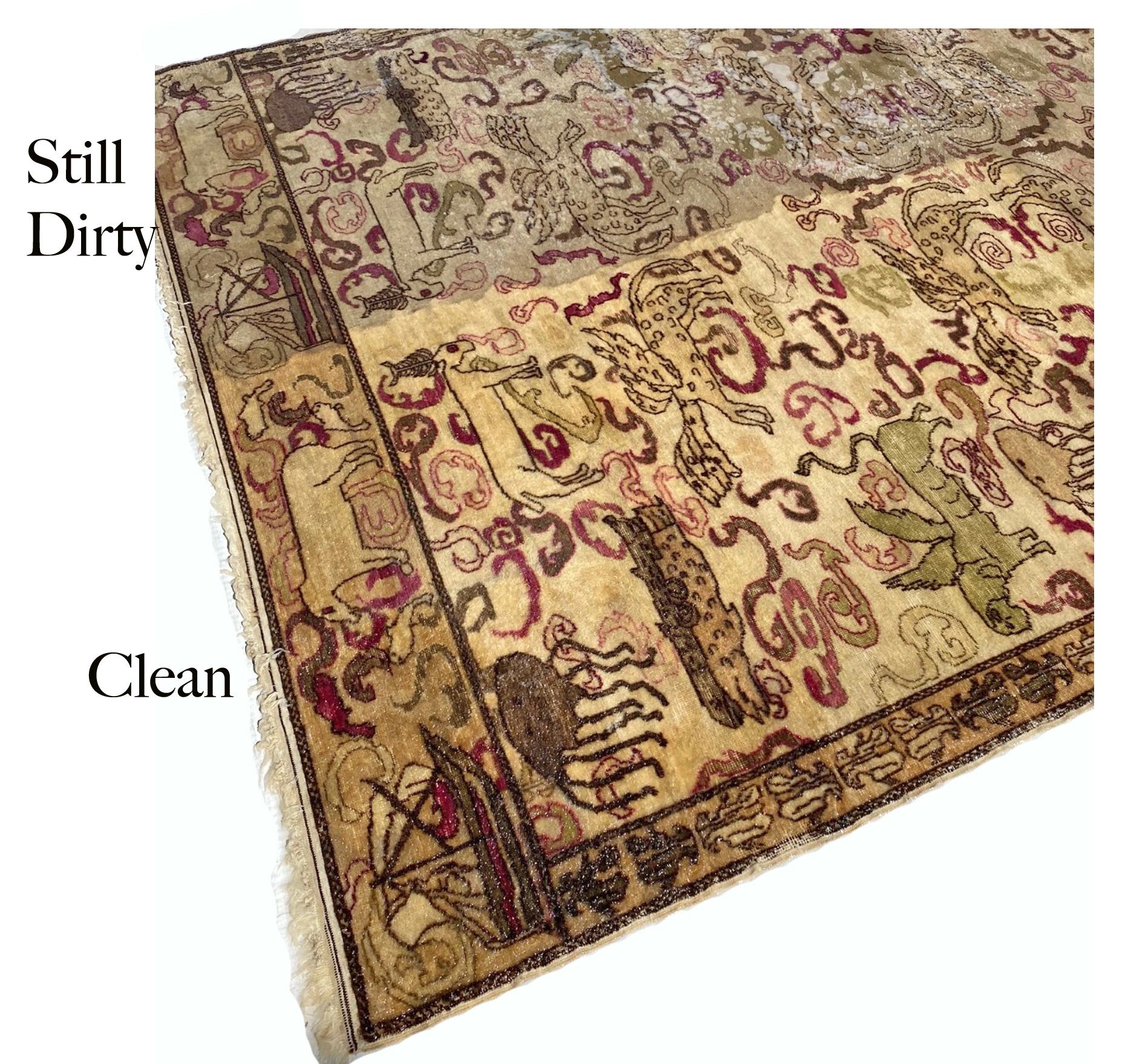
One of the things buyers rarely consider is that a handmade Oriental rug is, in effect, one of the largest filters in the home. It quietly traps dust and grit every day, which is exactly why proper care matters.
Between cleanings
- Vacuum only as needed, in the smooth direction of the pile. Not sure which way that is? Run your hand across the surface, the smooth direction points toward where the weaver began.
- Rotate the rug annually or semi-annually for balanced wear, especially in sunny rooms and traffic paths.
- Lift spills, don't scrub. Blot, and call a professional for anything stubborn or on a valuable piece.
How often to wash
There are no rigid rules, but as a guide: high-traffic and entry rugs benefit from a yearly professional wash; larger room-sized carpets every three to five years, depending on use. Older or fragile pieces may need a gentler schedule.
Why real hand washing matters
Think of a true hand wash like detailing a car versus a ten-minute drive-thru. The difference is the care: dry pre-wash dusting to remove embedded grit before any water touches the rug, attention to soap pH, thorough neutralizing of residue, conditioning, and proper drying. Harsh soaps, stiff brushes, and rushing do long-term damage you may not see for years.
Questions to ask any cleaner
- Do they do the work themselves, or farm it out?
- Does their insurance cover the value of your pieces?
- What is the soap pH, and is the rug run through a machine?
- Is there pre- and post-wash dusting, and how?
- How do they neutralize soap, condition, and dry the rug?
- Can they identify and safely wash fugitive dyes, colors that can run and ruin a rug?
- Can they identify and value what they are cleaning?
One last tip: any needed repair is best done after washing, so the restorer matches clean wool to a clean rug.
Have a question about a specific rug? We answer personally: price, condition, photos, and shipping. Get in touch or explore our antique Persian rugs for sale.