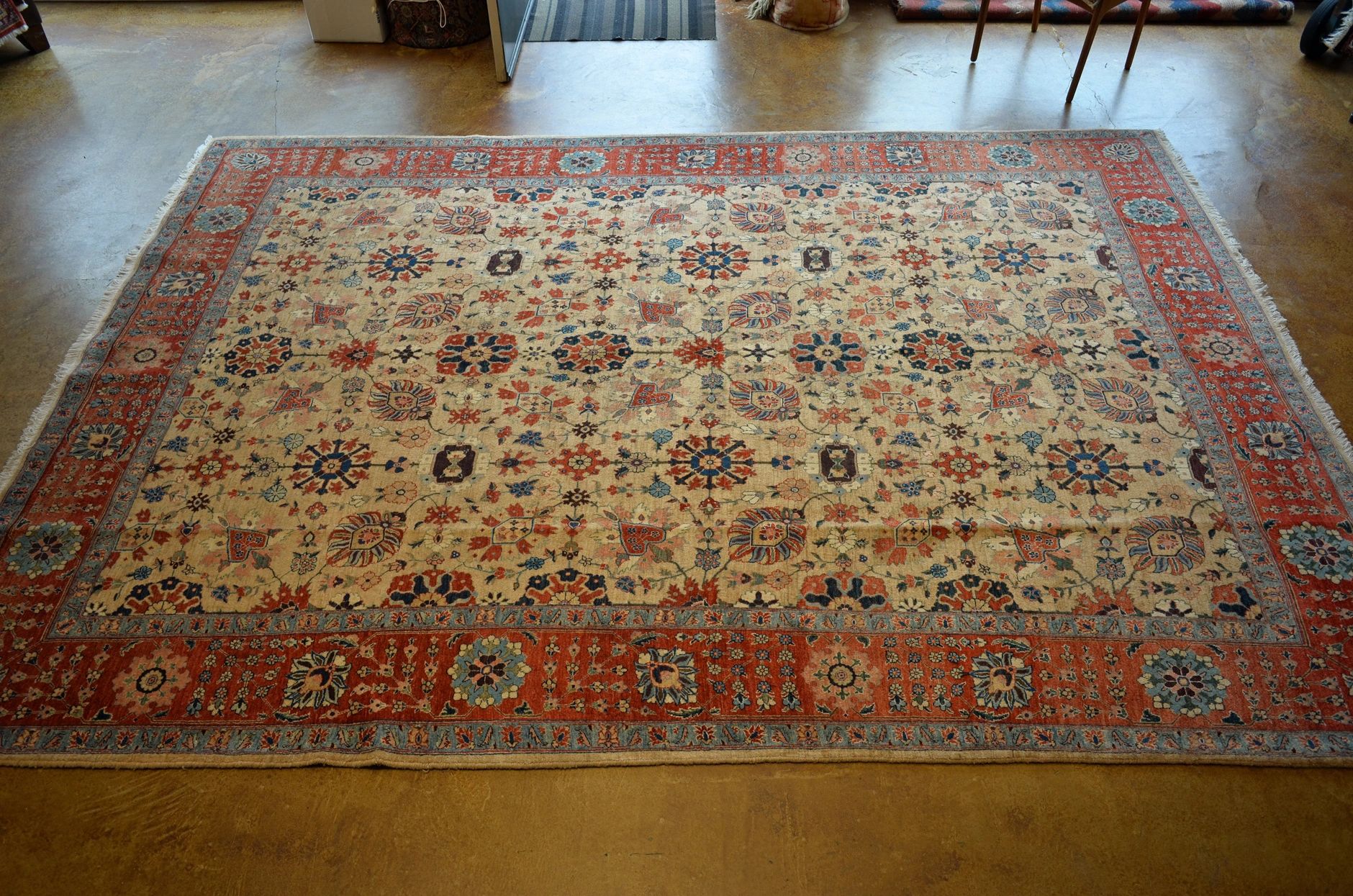
Few rugs inspire the loyalty that a Bidjar does. Woven in and around the town of Bijar in Persian Kurdistan, they are famous for one thing above all: density. The weave is compacted so heavily, wool wefts beaten down with metal tools, that the finished rug is stiff, heavy, and almost indestructible. Hence the nickname: the iron rugs of Persia.
What makes a Bidjar a Bidjar
- A dense, heavy handle. Pick one up and you feel it. That mass is why they lie flat and wear for generations.
- Crisp, confident drawing. Herati (fish) fields, bold medallions, shield and tulip motifs.
- Deep, lasting color. Indigo grounds and madder reds that age into something richer over time.
Designs to know
Look for the all-over Herati pattern, the architectural medallion layouts, and the wonderful named pieces collectors chase, “Shields,” “Tulips,” and the like. In our own gallery, the indigo-ground “Shields” carpet is a perfect example: built like a tank, a true heirloom investment.
Antique or new?
Antique Bidjars are prized and increasingly scarce. The good news is that the tradition is alive: our new Bidjar recreations are woven by descendants of the original weaving families using indigenous wool and natural dyes, in sizes from small 4×6 rugs to room-sized carpets. They give you that legendary durability without a century-old price tag.
Choosing one
Decide your size first, then your ground color (indigo and ivory are the classics), then the design density you love. Because each is one-of-one, the right move is simply to tell us your room and let us match it.
Have a question about a specific rug? We answer personally: price, condition, photos, and shipping. Get in touch or explore our antique Persian rugs for sale.